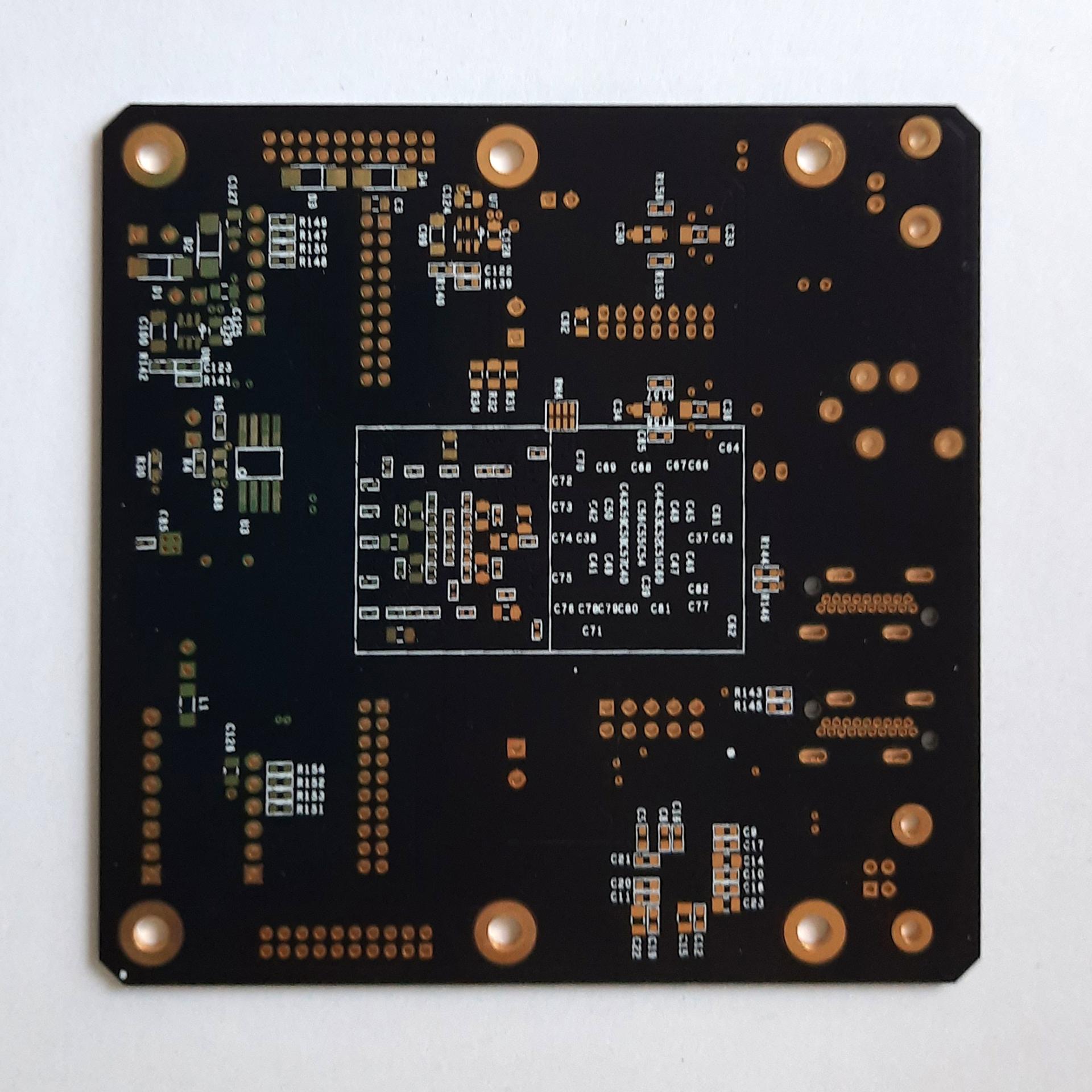
Printed circuit board construction
foil, laminated to the substrate. Chemical etching divides the copper into separate conductive lines called tracks or circuit paths, pads for connections, metallized holes Layer PCB 2 (vias) for passing connections between layers of copper as solid conductive areas for electromagnetic shielding or other purposes. Each of the conductive layers is designed with copper tracks (similar to
Types of printed circuit board
layers; Multilayer sandwich boards with additional internal layers of copper and insulation are called multilayer. PCBs can be single-sided (one layer 2 PCB Layer of copper), double-sided (two layers of copper on both sides of an insulating board), or multi-layered (outer and inner layers of copper alternating with insulating layers).
Printed circuit board assembly
concurrent with the adoption of surface mount technology. "Through holes" components are assembled 2 PCB Layer by their legs passing through the board and glued to the pads on the other side. "SMD" components are soldered on the same side of the board. A board can use both methods for soldering components.